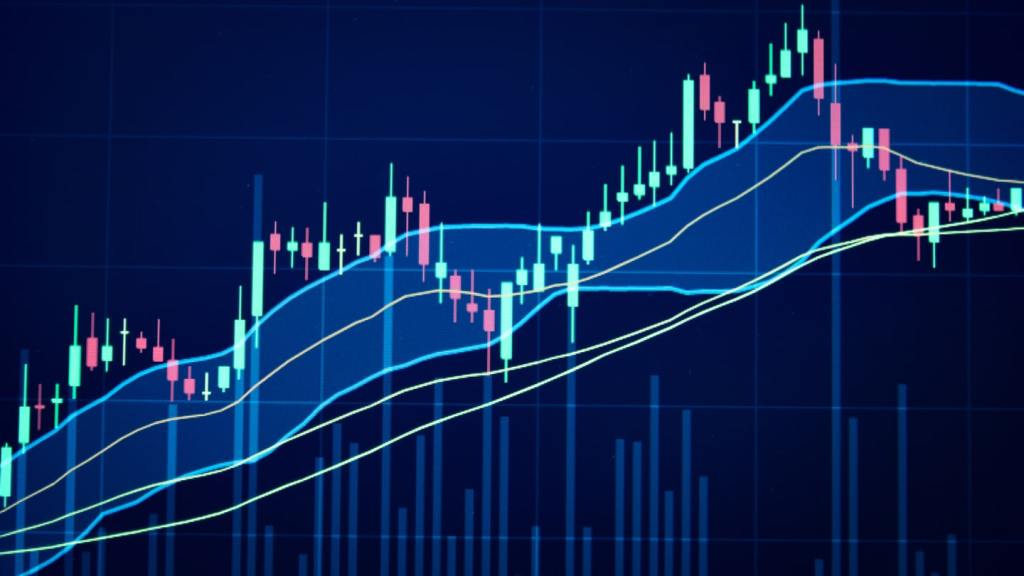
In this article I am going to share the top reasons why I am still using moving averages in my trading algorithms even in 2024.
Why Moving Averages Remain Supreme:
- Smoothed Price Trends:
- Moving averages help traders identify the overall direction of the market by smoothing out price fluctuations.
- This feature is particularly valuable in the ever-changing forex market, where trends can be obscured by short-term volatility.
- Trend Confirmation:
- Traders often rely on moving averages to confirm the existence of a trend.
- When prices consistently trade above a moving average, it signals an uptrend, while prices below indicate a downtrend.
- Support and Resistance Identification:
- Moving averages act as dynamic support and resistance levels.
- During an uptrend, the moving average often serves as a support, while in a downtrend, it acts as resistance.
- Crossing Signals:
- Moving average crossovers, where a shorter-term average crosses above or below a longer-term one, provide powerful buy or sell signals.
- These signals are especially useful for capturing trend reversals and potential entry or exit points.
- Versatility Across Timeframes:
- Moving averages are adaptable to different timeframes, making them suitable for both short-term and long-term trading strategies.
- Traders can use a combination of moving averages to analyze trends on multiple timeframes simultaneously.
- Risk Management:
- Moving averages help traders set effective stop-loss orders by identifying key support or resistance levels.
- This risk management aspect is crucial for protecting capital in the unpredictable forex market.
Calculating Moving Averages:
There are various types of moving averages, but the two most common ones are the Simple Moving Average (SMA) and the Exponential Moving Average (EMA).
1. Simple Moving Average (SMA):
- The SMA is calculated by summing up a set number of closing prices and dividing the total by the number of periods.
- Formula: SMA = (Sum of Closing Prices for n periods) / n
2. Exponential Moving Average (EMA):
- The EMA assigns different weights to recent prices, giving more importance to the latest data.
- EMA = (Closing Price * Multiplier) + (Previous EMA * (1 – Multiplier))
- Multiplier = 2 / (Number of Periods + 1)
In conclusion, moving averages remain indispensable tools for forex traders in 2024. Their ability to provide clarity in trend analysis, identify support and resistance levels, generate crossing signals, and adapt to various timeframes makes them an enduring favorite among traders. By understanding the calculations behind simple and exponential moving averages, traders can harness the power of these tools to make informed decisions and navigate the complexities of the forex market with confidence.


 The Nomad Trader
Hozzászólás