Updated March 18, 2026. On February 28, 2026, US and Israeli forces struck Iranian military infrastructure in a coordinated operation that killed Supreme Leader Ali Khamenei. Iran responded by declaring the Strait of Hormuz closed to Western and allied shipping. Within 72 hours, Brent crude jumped over 10%. Within two weeks, it had crossed $103 per barrel. Analysts are now describing this as the largest energy supply disruption since the 1970s oil crisis — and it is actively moving every major market you follow.
This article breaks down what the Strait of Hormuz is, why it matters to global markets, and what the trading implications are right now.
What Is the Strait of Hormuz?
The Strait of Hormuz is a narrow waterway — just 21 miles wide at its narrowest point — connecting the Persian Gulf to the Gulf of Oman and the open ocean. Iran sits to the north. Oman to the south. It is, without question, the single most important energy chokepoint on earth.

Through this narrow passage flows approximately:
- 20 million barrels of oil per day — roughly 20% of global supply
- 20% of the world’s LNG exports, primarily from Qatar
- Oil from Saudi Arabia, UAE, Iraq, Kuwait, and Iran heading to Asia, Europe, and beyond
- 84% of those flows destined for Asian markets — China alone receives a third of its total oil supply through this passage
- Europe receives 12–14% of its LNG from Qatar via the strait
There is no adequate bypass. Saudi Arabia’s East-West pipeline can move roughly 5 million barrels per day as an alternative route — but normal Hormuz traffic is 20 million. The UAE’s Abu Dhabi Crude Oil Pipeline adds another 1.5 million. The arithmetic does not work. A sustained closure cannot be substituted by pipeline capacity.
What Happened — A Timeline
The crisis unfolded fast. Here is the sequence as it stands on March 18:
February 28: The US and Israel launch Operation Epic Fury — coordinated airstrikes on Iranian military facilities, nuclear sites, and leadership. Supreme Leader Khamenei is killed. Iran launches retaliatory missile and drone strikes on US military bases, Israeli territory, and Gulf state infrastructure.
March 1–2: War-risk insurance premiums for the strait surge from 0.125% to 0.4% of vessel value per transit — adding $250,000+ per crossing for a large tanker. Brent crude jumps 10% in early trading. An IRGC official officially declares the strait “closed.”
March 2: Iranian drones strike Qatar’s Ras Laffan and Mesaieed LNG facilities. QatarEnergy halts all production. European natural gas prices nearly double within 48 hours — from €30/MWh to above €60/MWh peak.
March 3–8: Maersk and Hapag-Lloyd suspend Middle East routes. Over 150 vessels anchor outside the strait. The UK Maritime Trade Operations Centre reports 10 ship attacks by March 8. Five crew members killed.
March 5: Iran refines its position — the strait is closed specifically to ships from the US, Israel, and their Western allies. Non-Western flagged vessels may apply for permission to pass.
March 12: 21 confirmed attacks on merchant ships since February 28. Tanker traffic has dropped by approximately 70%. Some 400 vessels hold position in the Gulf of Oman.
March 13–16: Selective reopening begins. Turkey, India, and Pakistan negotiate passage for individual vessels. On March 16, a Pakistani tanker crosses with Iranian permission. Brent settles at $103.14 per barrel. Only 2–3 vessel crossings are recorded per day against a pre-war baseline of over 100 ships daily.
March 18 (today): The strait remains effectively closed to Western commercial shipping. The US Navy destroyed 16 Iranian minelaying vessels. Escort operations are being discussed but have not yet commenced at scale.
Why the Insurance Market Did the Work
One of the more striking aspects of this crisis is that Iran did not need to physically blockade the strait to shut it down. The commercial insurance market accomplished that independently.
When war-risk insurance premiums become economically prohibitive — or when insurers simply withdraw coverage entirely — no rational commercial operator sends a ship regardless of whether the water is physically open. Lloyd’s of London stated confidence in the marine market, but in practice, coverage for Hormuz transits became nearly unobtainable for Western-linked vessels within days of the conflict starting.
This is a structural insight that matters beyond the current crisis: the choke point does not need to be physically blocked to be effectively closed. Insurance withdrawal is sufficient. The lesson is that energy markets are more fragile than the physical geography suggests.
Market Impact: Asset by Asset
Oil — Brent and WTI
Brent crude prices surged 10–13% to around $80–82 per barrel by March 2, and have continued climbing since. Brent crude ended trading on Friday at $103.14 per barrel, after surging to nearly $120 earlier as fears of disrupted production and shipping intensified.
The IEA took the unprecedented step of releasing 400 million barrels of oil from reserve — but analysts were quick to note the limits of this intervention. Even when compared with normal traffic through the Strait of Hormuz — around 20 million barrels per day — the released oil equals only about 20 days of typical flows. The release calms panic temporarily but does not restore the shipping corridor.
Goldman Sachs and Barclays both flagged $100+ oil as a base case for sustained disruption. OPEC+ pledged a 206,000 barrel per day production increase — a marginal gesture against a 20 million barrel per day chokepoint disruption.
Natural Gas — European TTF
Qatar is the world’s largest LNG exporter, and its facilities were struck early in the conflict. Natural gas prices in Europe surged, rising from €30/MWh the past week, to €46/MWh on Monday, March 2, peaking above €60/MWh on Tuesday, March 3 — nearly double from the previous week. Europe receives 12–14% of its LNG through the strait, and the disruption arrived in an environment where European gas storage was already being watched carefully.
Equity Markets
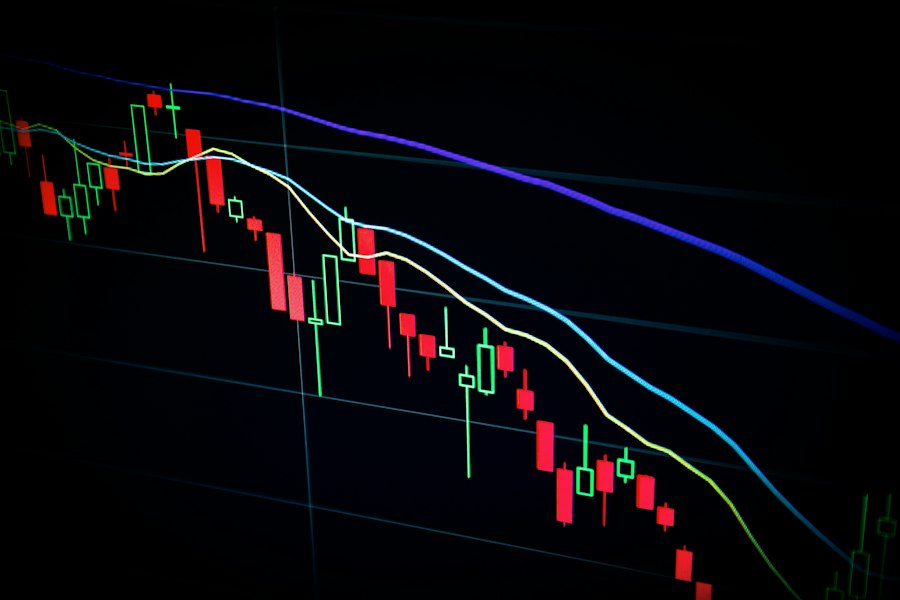
Stock markets experienced declines, with the Dow Jones Industrial Average falling over 400 points on March 2. The broader equity picture reflects three converging pressures: higher energy costs reducing corporate margins and consumer purchasing power, inflation re-acceleration complicating central bank decisions, and a generalised risk-off shift as geopolitical uncertainty rises.
Forex — The Currency Impacts
The foreign exchange market is where the impacts are most nuanced and most asymmetric. Not all currencies respond the same way to an oil shock of this type:
USD — Strengthening. Classic risk-off flight to safety. Additionally, the United States is now a net energy exporter, meaning it is partially insulated from — and in some scenarios benefits from — higher oil prices relative to importing economies.
JPY — Complex and volatile. Japan imports approximately 70% of its Middle Eastern oil through the strait. About 70% of this Middle Eastern oil is delivered to Japan by ships that pass through the Strait of Hormuz. Higher oil worsens Japan’s current account, creating yen selling pressure. But simultaneously, risk-off flows create safe-haven yen demand. The two forces are pulling in opposite directions, creating extreme volatility in USDJPY.
EUR — Weakening. Europe’s energy dependence on Qatar LNG and Middle Eastern oil creates direct economic pressure. Higher energy costs feed through to industrial margins, household bills, and inflation — all negative for the euro.
AUD and CAD — Benefiting. Both Australia and Canada are commodity exporters. Higher oil prices improve their terms of trade and support their currencies relative to importing economies.
Asian emerging markets — Under pressure. Thailand especially is a standout oil price loser — it has the biggest net oil imports in Asia at 4.7% of GDP, and each 10% oil price rise worsens the current account by around 0.5 percentage point of GDP. The Thai baht, Indian rupee, Korean won, and Philippine peso are all facing current account deterioration from higher oil import costs.
The Alternative Routes — And Why They’re Not Enough
When Hormuz disruption scenarios are discussed, alternative pipeline and shipping routes are always mentioned. The reality is more sobering:
Saudi Arabia’s East-West Pipeline: Runs from the eastern oil fields to the Red Sea port of Yanbu. Capacity approximately 5 million barrels per day. Normal Hormuz traffic: 20 million. Even at full utilisation, this covers 25% of displaced volume — and the Red Sea route passes close to Yemen, where Houthi threats remain active.
UAE’s Abu Dhabi Crude Oil Pipeline (ADCOP): Diverts to the port of Fujairah on the Arabian Sea outside the strait. Capacity approximately 1.5 million barrels per day. Useful margin, but not transformative scale.
Critically, in March 2026 several drones struck Duqm and Salalah — the deep-water Omani ports that theoretically allow tankers to bypass the strait — with at least one fuel storage tank in Duqm damaged. Sohar fell within an insurer’s war risk area, potentially increasing charter and insurance costs for ships using that route.
The bypass options are being degraded at the same time as the primary route is closed.
The Two Scenarios Analysts Are Debating
Scenario A — Short disruption (2–6 weeks): Diplomatic negotiation, selective reopening, or US military action sufficient to restore commercial shipping confidence leads to a gradual normalisation of traffic. Oil retreats toward $80–85. The economic damage is real but contained. The concentration of hundreds of vessels in the Gulf of Oman indicates that many operators expect some form of reopening or controlled transit regime rather than a prolonged closure.
Scenario B — Extended closure (months): The corridor remains effectively closed to Western shipping for an extended period. Oil sustains above $100. Analysts forecast prices could reach $100 per barrel if disruptions persist, potentially adding 0.8% to global inflation. Central banks face a stagflation scenario — inflation too high to cut rates, growth slowing fast enough to demand stimulus. This is the 1970s analogue that economists are quietly worried about.
As of March 18, the situation points toward a gradual selective reopening for non-Western vessels, with the Western corridor still effectively closed. The direction matters more than the current state — watch whether daily transit counts rise or fall this week.
Key Numbers to Watch
- Brent crude above $100 sustained — confirms extended disruption scenario is being priced
- European natural gas (TTF) above €50/MWh — signals Qatar LNG disruption is ongoing
- Daily Hormuz vessel crossings — baseline was 100+ per day; currently 2–3. Watch for this to recover toward 20–30 as a signal of partial normalisation
- USDJPY — direction reveals which narrative is winning: safe-haven (yen up) or current account deterioration (yen down)
- DXY above 106 — sustained dollar strength confirms broad risk-off environment
- War-risk insurance premiums — if these fall back toward 0.2% from current levels, commercial operators will return to the route
Historical Context — Why This Is Different
Previous Hormuz tension events — 1987-88 during the Iran-Iraq War, various Iranian threats in 2011-12, the tanker attacks of 2019 — all resolved without a sustained closure. Markets priced in a geopolitical premium, the threat passed, and oil normalised.
What makes 2026 different is the combination of factors: a direct military conflict rather than proxy tensions, actual attacks on commercial vessels rather than threats, the simultaneous disruption of Qatar LNG production, and the degradation of bypass routes. The economic impact of the 2026 Iran war has been described as the worst since at least the 1970s, echoing the supply shortages, high oil prices, and projections of global inflation, risks of recession and stagflation if disruptions persisted.
That comparison to the 1970s should be taken seriously — not as an inevitability, but as the tail risk that markets are now explicitly pricing.
This article will be updated as the situation develops. Sources: Wikipedia (2026 Strait of Hormuz Crisis, Economic Impact of the 2026 Iran War), Al Jazeera, CNBC, Kpler/MarineTraffic, Congressional Research Service, Windward Maritime Intelligence, NPR, CNN Business, Euronews. All market data as of March 18, 2026.